
Choosing cat litter does not sound very exciting at first.
Until your cat refuses the box, tracks litter across the floor, or gives you a look that says, “Absolutely not.”
For new cat owners, cat litter is one of those small decisions that quickly becomes a big one. There are many types, many textures, and many opinions. Some litters control odor well. Some are easier to clean. Some create less dust. Some are better for sensitive cats.
So how do you choose the best cat litter for beginners?
The answer is simpler than it looks. You do not need the most expensive option or the trendiest brand. You just need a litter that is safe, practical, and comfortable for your cat.
This guide will help you understand the main types of cat litter, the pros and cons of each, and what beginners should look for first.
Why Cat Litter Matters So Much
Cats are usually very clean animals.
That is good news for owners, but it also means they can be picky. If your cat dislikes the texture, smell, or cleanliness of the litter box, problems can start fast.
A cat may:
- avoid the litter box
- scratch around without using it
- use the box less often
- choose another place in the house instead
That is why litter is not just a cleaning product. It is part of your cat’s daily comfort.
Choosing the right litter can make life much easier for both of you.
Start With the Safest Beginner Choice
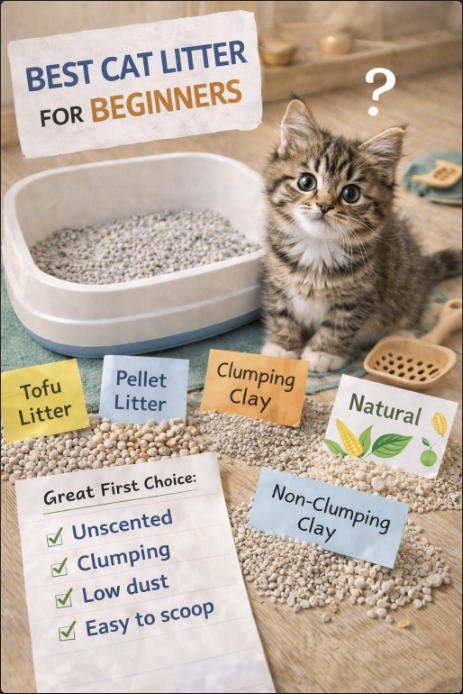
If you are bringing home a cat for the first time, the easiest starting point is usually:
an unscented clumping litter
Why?
Because it is familiar, widely available, easy to scoop, and simple for most beginners to manage. Strong perfumes can bother some cats, so unscented is often a safer first choice.
Once your cat settles in, you can always test other types later if needed.
The Main Types of Cat Litter
There is no single “perfect” litter for every cat. But it helps to know the basic categories before buying anything.
1. Clumping Clay Litter
This is one of the most common options.
It forms solid clumps when wet, which makes daily scooping easier. Many owners like it because it is simple to clean and good at controlling odor when maintained well.
Pros
- easy to scoop
- widely available
- familiar for many cats
- good odor control
Cons
- can be dusty
- may track around the house
- often heavier than other types
For many beginners, this is the most practical place to start.
2. Non-Clumping Clay Litter
This type absorbs moisture but does not form solid clumps.
Some people use it because it can be cheaper, but it is often less convenient for daily maintenance.
Pros
- usually affordable
- easy to find
- absorbs liquid reasonably well
Cons
- harder to clean fully
- may smell faster
- needs more frequent full changes
For beginners, this is usually less convenient than clumping litter.
3. Tofu Litter
Tofu litter has become very popular in recent years.
It is often lighter than clay litter and may produce less dust. Many owners like it because it can feel cleaner and easier to handle.
Pros
- low dust
- lighter to carry
- often good for odor control
- easier for some owners to clean
Cons
- some cats take time to adjust
- can be more expensive
- brand quality varies a lot
Tofu litter can be a very good option if you want something lighter and cleaner-feeling than clay.
4. Pellet Litter
Pellet litter comes in larger pieces rather than fine grains.
It is often used by owners who want less tracking and less mess on the floor. However, not all cats like the texture.
Pros
- less tracking
- often lower dust
- easier to keep off paws and floors
Cons
- some cats dislike the texture
- cleaning can feel less convenient
- not always ideal for cats used to softer litter
This can work well, but it is not always the easiest first choice for a cat that prefers softer surfaces.
5. Natural or Plant-Based Litter
This includes litter made from materials such as corn, wheat, paper, or wood.
These options can appeal to owners looking for something different from standard clay litter.
Pros
- often lower dust
- may be lighter
- can feel more eco-friendly depending on the material
Cons
- odor control varies
- some cats do not like the texture
- some types break down faster than expected
These can work well, but beginners may still find a classic unscented clumping litter easier for the first setup.
Scented or Unscented?
This is an important question.
Many owners assume scented litter must be better because it smells fresher to humans. But cats often feel differently. A strong scent may be unpleasant or overwhelming for them.
That is why unscented litter is usually the better beginner option.
If odor control is a concern, regular scooping and box cleaning usually matter more than perfume.
Dust Matters More Than You Think
Some litters create a noticeable cloud when poured or scooped.
That dust can be annoying for people, but it can also be uncomfortable for cats, especially in smaller spaces. If your cat seems sensitive, sneezes around the box, or avoids it after cleaning, dust may be part of the problem.
Low-dust litter is often worth considering, especially in apartments or small rooms.
Tracking Can Drive You Crazy
Let’s be honest.
One of the biggest surprises for new cat owners is how far litter can travel. Tiny grains somehow end up outside the box, across the room, and occasionally in places that seem physically impossible.
If this already sounds like something that would annoy you, look for a litter with lower tracking or use a litter mat near the box.
This will not remove the problem completely, but it can help a lot.
Your Cat’s Preference Comes First
Here is the part many beginners do not expect:
Your opinion matters, but your cat gets the final vote.
You may love a litter because it looks neat, smells clean, and costs less. But if your cat dislikes the texture or scent, that litter may create more problems than it solves.
Cats often care about:
- softness under their paws
- smell
- cleanliness
- box location
- familiarity
If you switch litter and your cat suddenly hesitates, that is something worth paying attention to.
Do Not Change Litter Too Suddenly
Cats usually prefer consistency.
If your cat is already using one type of litter successfully, changing everything at once may cause stress. If you want to test a new type, do it gradually when possible.
A sudden switch can lead to confusion or avoidance, especially in a new home.
For beginners, simple and familiar usually works best.
What Should You Choose First?
If you just want the easiest beginner answer, start here:
A good first setup is:
- unscented
- clumping
- low-dust if possible
- easy to scoop
- comfortable texture for paws
This gives you a strong, safe starting point.
Later, if you notice problems with dust, weight, or tracking, you can explore tofu litter or another lower-mess option.
Quick Beginner Tips for Litter Success
Even the best cat litter will not work well if the setup is poor.
Keep these basics in mind:
- scoop the box daily
- place it in a quiet area
- keep it away from food and water
- clean the box fully on a regular schedule
- avoid strong scented products at first
- use a litter mat if tracking becomes a problem
Often, litter box success is about routine as much as product choice.
Final Thoughts
The best cat litter for beginners is not the one with the fanciest packaging or the boldest claims.
It is the one your cat feels comfortable using and that you can manage easily every day.
For most first-time cat owners, unscented clumping litter is the safest and simplest place to begin. From there, you can pay attention to dust, odor, tracking, and your cat’s reaction to decide whether you want to keep it or try something different.
The goal is not perfection.
The goal is a litter box your cat will use happily — and a home that feels a little less chaotic.
That is already a big win.
Leave a Reply