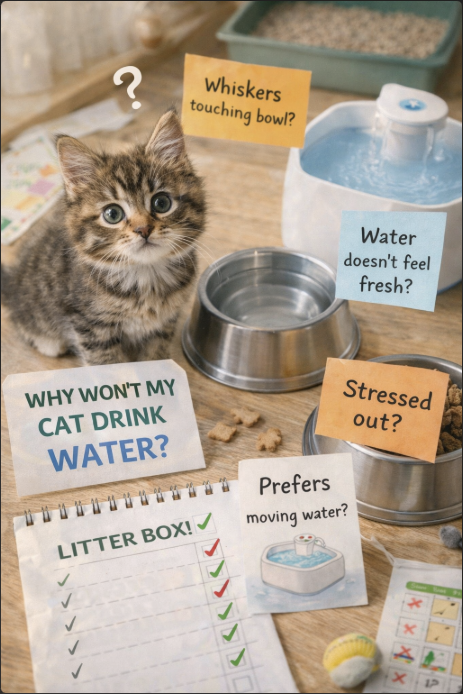
It can be surprisingly stressful to notice your cat walking past the water bowl again and again.
You fill it. You place it in a good spot. You even change the water. But your cat still seems completely uninterested.
If this sounds familiar, you are not alone.
Many cat owners worry that their cat is not drinking enough water. And honestly, it is a valid concern. Cats often have a low thirst drive compared to other pets, which means they may not always drink as much as we expect.
The good news is that there are clear reasons why this happens — and in many cases, there are simple ways to help.
Why Some Cats Do Not Drink Much Water
Cats are naturally different from dogs when it comes to hydration.
In the wild, cats used to get a lot of their moisture from prey. Because of that, many modern cats still do not feel a strong urge to drink water often, especially if they seem otherwise healthy.
That means your cat may not run to the bowl just because it is there.
This does not always mean something is wrong. But it does mean you need to pay closer attention to your cat’s habits.
The Bowl Might Be the Problem
Sometimes the issue is not the water.
It is the bowl.
Cats can be surprisingly picky about the shape, depth, and material of their water bowl. Some dislike deep bowls because their whiskers touch the sides. Others do not like plastic because it can hold smells over time.
A bowl that seems perfectly normal to you may feel uncomfortable to your cat.
A better setup may include:
- a wide, shallow bowl
- ceramic or stainless steel material
- a bowl that is easy to clean
- fresh water changed daily
Sometimes a very small change makes a big difference.
Bowl Placement Matters More Than You Think
Cats care a lot about where things are placed.
If the water bowl is too close to the litter box, your cat may avoid it. If it is placed in a noisy area, near heavy foot traffic, or beside loud appliances, your cat may not feel relaxed enough to drink.
Some cats also prefer their water bowl to be away from their food.
This may sound strange, but it is common.
Try placing water:
- in a quiet area
- away from the litter box
- away from the food bowl
- in more than one place around the home
More options can encourage more drinking.
Your Cat May Prefer Moving Water
A lot of cats are more interested in running water than still water.
That is why some cats try to drink from taps, sinks, or even shower floors. For them, moving water may seem fresher or more interesting.
If your cat ignores the bowl but runs to the bathroom when you turn on the sink, this may be the reason.
A pet water fountain can help in this case. Many cats find it more attractive than a regular bowl, and owners often notice an improvement in drinking habits after switching.
Wet Food Can Help a Lot
If your cat is not drinking much water, food becomes even more important.
Wet food contains much more moisture than dry food, so it can help increase your cat’s total water intake without making them drink directly from the bowl.
This can be especially helpful for cats who naturally drink very little.
Even adding a small amount of wet food to the daily routine may support better hydration. Some owners also mix a little extra water into wet food, as long as the cat still enjoys eating it.
For many cats, this is one of the easiest ways to improve hydration.
The Water May Not Feel Fresh Enough
Cats often prefer very fresh water.
If the bowl has been sitting for too long, has dust in it, or carries a smell from food or old water, your cat may simply reject it.
This is one of the reasons why some cats seem “fussy” even though they are actually being consistent.
They want clean, fresh water.
Helpful habits include:
- changing the water every day
- washing the bowl regularly
- keeping food crumbs out of the water
- using cool, clean water
A clean bowl is not just nicer to look at. It may actually encourage your cat to drink.
Stress Can Change Drinking Habits
Cats are very sensitive to changes in their environment.
A new home, a new pet, unfamiliar visitors, loud noise, or even moving furniture around can affect your cat’s behavior. Some cats respond to stress by hiding more, eating less, or drinking less.
If your cat recently went through a change and is now ignoring water, stress may be playing a role.
In that case, hydration support should go along with helping your cat feel safe again.
Quiet spaces, routine, and patience can make a difference.
Some Cats Secretly Drink More Than You Realize
Before assuming your cat is drinking nothing, take a closer look.
Your cat may be drinking at times you do not notice, especially at night or when the house is quiet. If there are multiple water sources in the home, you may not realize which one your cat prefers.
Some cats also drink from unusual places, such as:
- bathroom sinks
- plant trays
- shower corners
- glasses left on tables
Not ideal, of course — but definitely possible.
So before you panic, observe carefully.
Signs Your Cat May Not Be Getting Enough Water
It is important to know when “not drinking much” becomes a bigger issue.
Watch for signs such as:
- dry gums
- low energy
- reduced appetite
- constipation
- vomiting
- sunken-looking eyes
- unusual hiding
- peeing less than usual
These signs may suggest dehydration or another health problem.
If your cat seems weak, refuses food, or suddenly changes normal habits, do not wait too long to seek veterinary advice.
When It Could Be a Health Problem
Sometimes a cat avoids water because something else is going on.
Dental pain, nausea, illness, fever, urinary issues, and other medical problems can affect drinking habits. If your cat suddenly stops drinking, acts uncomfortable, or seems different overall, it is worth taking seriously.
This is especially important if the change is sudden.
A cat who has always been a light drinker may simply need hydration support. But a cat who suddenly avoids water completely may need medical attention.
Easy Ways to Help Your Cat Drink More Water
If your cat is healthy but still drinks very little, there are several gentle ways to encourage better hydration.
Try these simple ideas:
- use a wide, shallow bowl
- switch to ceramic or stainless steel
- place water in multiple quiet spots
- move the bowl away from food and litter
- try a pet water fountain
- offer more wet food
- mix a little water into wet food
- refresh water more often
- observe which spots your cat prefers
You do not need to try everything at once.
Start with one or two changes and see how your cat responds.
Final Thoughts
If your cat is not drinking water, it does not always mean there is an emergency.
Sometimes the answer is as simple as bowl shape, water freshness, or a preference for moving water. Other times, the real solution is increasing moisture through wet food or changing the bowl location.
The key is to stay observant.
Cats can be subtle, but they usually give clues when something is not quite right. If you notice your cat drinking very little, start by looking at the environment, the bowl, and the daily routine. Small changes can go a long way.
And if your cat seems unwell or suddenly stops drinking altogether, do not ignore it.
A little attention now can prevent a much bigger problem later.

Leave a Reply